
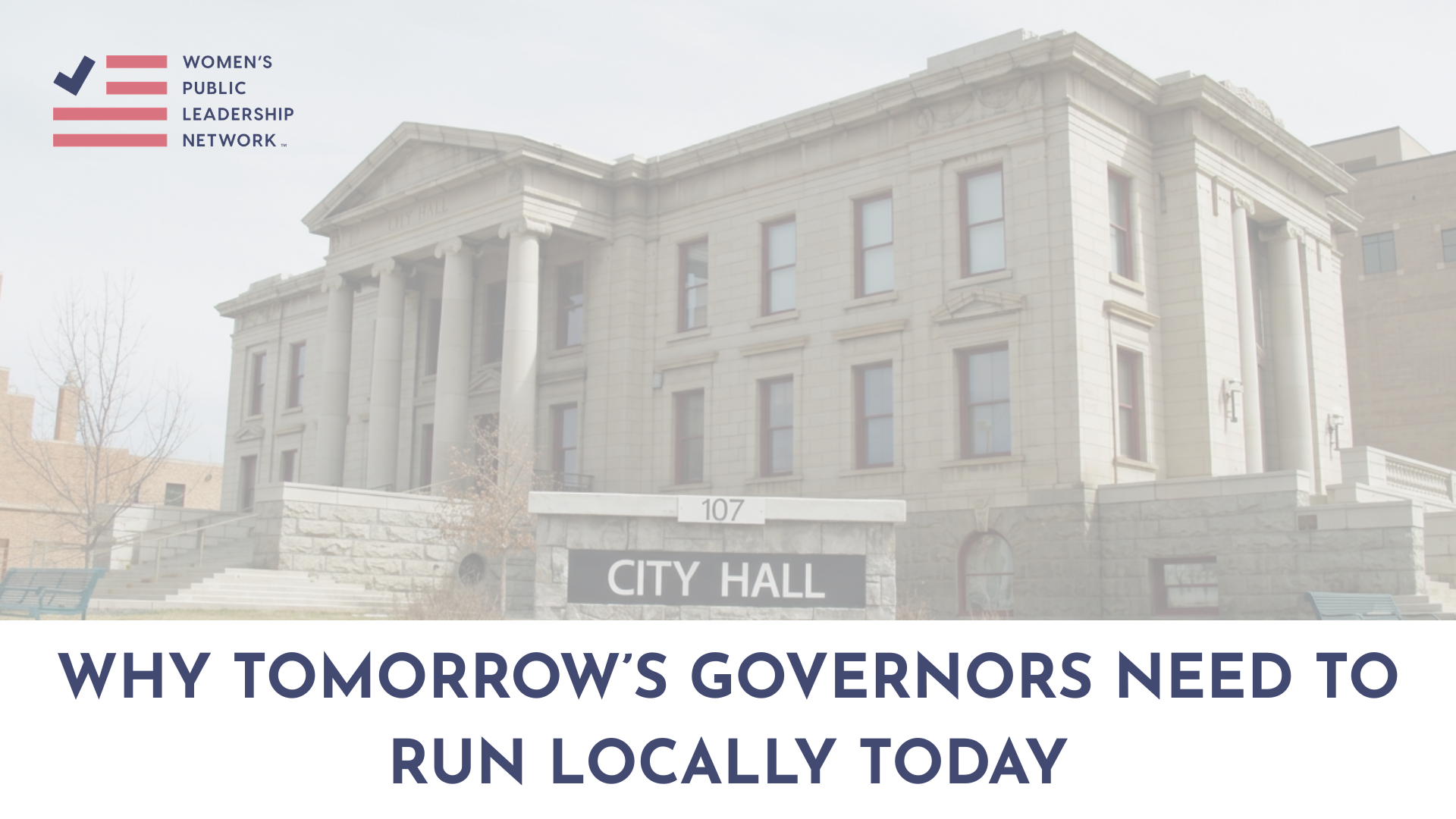
Why Tomorrow’s Governors Need to Run Locally Today
Over the last few election cycles, we’ve had the distinct privilege of celebrating shattered glass ceilings at the state level. We reached a historic high water mark for the number of women serving as governors across the country, proving that voters are eager for the pragmatic, solutions-oriented executive leadership that women consistently bring to the table.
As we reflected after the last election cycle, these milestone moments signal real momentum. But as we navigate today's massive election landscape, we are facing a critical turning point.
A record number of these trailblazing women governors are preparing to leave office due to term limits and planned retirements. While we celebrate their legacies and the trails they’ve blazed, their impending departures force us to ask a hard question: Who is next in line?
The Current Milestone
Following recent inaugurations, including Democratic Governor Mikie Sherrill in New Jersey and Republican Governor Kelly Ayotte in New Hampshire, a record 14 women are serving as governor simultaneously. This historic bipartisan group spans the political spectrum, governing states from Alabama to New Mexico. It is a milestone decades in the making, built by women from both major parties who have repeatedly proved that voters trust women to lead their states.
Looking Beyond 2026
But protecting this year's record is really the short-term question. The one that matters more is what the field of women candidates for governor looks like in 2030, 2034, and beyond. That number doesn't grow on its own, and it isn't decided in the year of the governor's race at all.
Statewide campaigns require immense resources, established networks, and a consistent public record. To have viable women candidates for the highest state offices in the future, we must actively recruit, train, and support women candidates today. The leaders who will run our states in ten years are making their entry into public service right now.
The Local Pipeline Reality
Governors rarely appear out of nowhere. Research by the Center for American Women and Politics (CAWP) on women's pathways to office found that nearly two-thirds of women state representatives identified the state legislature as their first elected office, a markedly different route than the path typically taken to Congress. If women are underrepresented in state houses and city halls today, they'll be underrepresented on gubernatorial ballots a decade from now.
A city council seat teaches a leader how to negotiate zoning laws, revitalize neighborhoods, and manage municipal budgets. A county commission role provides hands-on experience with infrastructure, public safety, and public health management. A school board campaign forces a candidate to listen directly to the concerns of parents and educators, building policies that directly impact families in their community.
These are roles where real tangible governance happens, providing the exact skills required to successfully manage an entire state.
Moreover, running locally builds the crucial infrastructure needed for future success. It establishes early name recognition, cultivates a reliable grassroots donor base, and hones a candidate's messaging on the ground. When a woman runs for local office, she isn't just serving her immediate community; she is building the foundation of a political resume that voters will trust when she eventually runs for state representative, attorney general, or governor.
Which is why there is no better moment than this cycle to start the future of public leadership, one city council seat, one county commission, one school board race at a time. Explore WPLN's free candidate training resources and take the first step today.
If you're considering a run for office, remember that representation matters. Your unique perspective and lived experience can inspire others and bring new voices into the political process. WPLN is here to help you get there! Explore free candidate training resources on our website and check out our upcoming events where you can register for virtual and in-person programs and connect with a national network of women leaders.